燕山君

燕山君

HD中字

7.0 |06月29日 |已完结
简介:
燕山君即位為帝,一心要追封被先王廢黜賜死的母后尹妃,但受百官阻撓而作罷。無法恢復尹妃的身份,讓燕山君感到日夜被母親的冤魂纏繞,因而變得異常暴躁,荒廢政事。  申相玉對於《燕山君》被西方評為「韓國的《哈姆雷特》」,顯得不以為然,而且對於當年為了趕及新年檔期上映,只能用兩個月倉促拍竣一部歷史鉅片,極為不滿。連同翌年的續集《燕山暴君》(1962),他曾揚言希望把兩部影片的菲林底片都燒毀。儘管如此,《燕山君》在當年還是叫好叫座,獲頒第一屆大鐘獎(1962)的最佳電影。
猜你喜欢
换一换
耶稣基督万世巨星
539
1.0
已完结
耶稣基督万世巨星
1.0
更新时间:06月29日
主演:格伦·卡特,杰罗姆·普拉顿,Renée Castle,Fred Johanson,里克·梅奥尔,Frederick B. Owens,迈克尔·谢弗,Tony Vincent,Cavin Cornwall,Pete Gallagher,Michael McCarthy,Philip Cox,Matt Cross,Kevin Curtin,Paul Vickers,万山树,果尔达·罗斯乌威尔,洛德斯·法比尔斯,Sebastien Torkia,Jacob Dunn
简介:这部音乐剧DVD取材于耶稣的生平事迹,韦伯创新地将严肃的宗教故事和前卫的摇滚音乐联系起来,是一部艺术表现非常大胆、思想性也极为深刻的作品。如果说《约瑟夫与神奇彩衣》是对圣经故事的图解,那么《万世巨星》从表面上看简直就是对传统的颠覆与反动:上帝的儿子耶稣不再时刻带着圣哲的光环,他有软弱,有动摇,更多的人性代替了神性;犹大卖主也不是出自贪婪,而是出自上帝安排的命运,自杀后的犹大穿着白袍带领一个天使唱诗班向耶稣提出几个哲学问题,耶稣竟然也不知道答案。细心的读者不难看出这样的情节安排和电影《耶稣基督的最后诱惑》的相似之处,与后者一样,该剧刚一推出,便遭到了正统宗教人士的强烈抗议,这反而增加了它的知名度,其插曲《我不知如何爱他》(I don't know how to love Him)、《万世巨星》(Superstar)长时间徘徊在各大唱片排行榜上。  笔者感觉此剧的本意和《耶稣基督的最后诱惑》一样,并不在于离经叛道,而是通过曲折的形式表现殉道者对神的服从,因为在该剧的最后,耶稣依照神的安排为人类的罪舍身又复活,并在原谅了他的敌人后升天而去。如果你对基督教有较深了解的话,相信该剧还是能够给你一些不同角度的思考。当然,撇开背景不谈,即便单单作为一出摇滚音乐剧来欣赏,这盘DVD也是不容错过的。该剧的另一个版本是1973年由环球影片公司出品的同名电影。  式圣经片给人更亲切的感觉。安德鲁.莱特韦伯创作的插曲优美动听,全片摄影和剪接都具一流水准。
338
2000
耶稣基督万世巨星
主演:格伦·卡特,杰罗姆·普拉顿,Renée Castle,Fred Johanson,里克·梅奥尔,Frederick B. Owens,迈克尔·谢弗,Tony Vincent,Cavin Cornwall,Pete Gallagher,Michael McCarthy,Philip Cox,Matt Cross,Kevin Curtin,Paul Vickers,万山树,果尔达·罗斯乌威尔,洛德斯·法比尔斯,Sebastien Torkia,Jacob Dunn
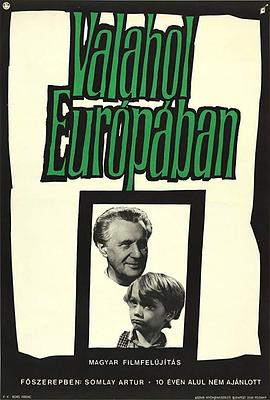
欧洲的某个地方
32
1.0
已完结
欧洲的某个地方
1.0
更新时间:06月29日
主演:Artúr Somlay,Miklós Gábor,Zsuzsa Bánki
简介:Somewhere in the remote region, the war ends. In the midst of ruined cities and houses in the streets, in rural hamlets, everywhere where people still live, are children who have lost their homes and parents. Abandoned, hungry, and in rags, defenseless and humiliated, they wander through the world. Hunger drives them. Little streams of orphans merge into a river which rushes forward and submerges everything in its path. The children do not know any feeling; they know only the world of their enemies. They fight, steal, struggle for a mouthful of food, and violence is merely a means to get it. A gang led by Cahoun finds a refuge in an abandoned castle and encounters an old composer who has voluntarily retired into solitude from a world of hatred, treason, and crime. How can they find a common ground, how can they become mutual friends The castle becomes their hiding place but possibly it will also be their first home which they may organize and must defend. But even for this, the price will be very high.  To this simple story, the journalist, writer, poet, scriptwriter, movie director, and film theoretician Béla Balázs applied many years of experience. He and the director Géza Radványi created a work which opened a new postwar chapter in Hungarian film. Surprisingly, this film has not lost any of its impact over the years, especially on a profound philosophical level. That is to say, it is not merely a movie about war; it is not important in what location and in what period of time it takes place. It is a story outside of time about the joyless fate of children who pay dearly for the cruel war games of adults.  At the time it was premiered, the movie was enthusiastically received by the critics. The main roles were taken by streetwise boys of a children's group who created their roles improvisationally in close contact with a few professional actors, and in the children's acting their own fresh experience of war's turmoil appears to be reflected. At the same time, their performance fits admirably into the mosaic of a very complex movie language. Balázs's influence revealed itself, above all, in the introductory sequences an air raid on an amusement park, seen in a montage of dramatic situations evoking the last spasms of war, where, undoubtedly, we discern the influence of classical Soviet cinematography. Shooting, the boy's escape, the locomotive's wheels, the shadows of soldiers with submachine guns, the sound of a whistle—the images are linked together in abrupt sequences in which varying shots and expressive sharp sounds are emphasized. A perfectly planned screenplay avoided all elements of sentimentality, time-worn stereotypes of wronged children, romanticism and cheap simplification. The authors succeeded in bridging the perilous dramatic abyss of the metamorphosis of a children's community. Their telling of the story (the scene of pillaging, the assault on the castle, etc) independently introduced some neorealist elements which, at that time, were being propagated in Italy by De Sica, Rossellini, and other film artists. The rebukes of contemporary critics, who called attention to formalism for its own sake have been forgotten. The masterly art of cameraman Barnabás Hegyi gives vitality to the poetic images. His angle shots of the children, his composition of scenes in the castle interior, are a living document of the times, and underline the atmosphere and the characters of the protagonists. The success of the picture was also enhanced by the musical art of composer Dénes Buday who, in tense situations, inserted the theme of the Marseilaise into the movie's structure, as a motive of community unification, as an expression of friendship and the possibility of understanding.  Valahol Europaban is the first significant postwar Hungarian film. It originated in a relaxed atmosphere, replete with joy and euphoria, and it includes these elements in order to demonstrate the strength of humanism, tolerance, and friendship. It represents a general condemnation of war anywhere in the world, in any form.
665
1948
欧洲的某个地方
主演:Artúr Somlay,Miklós Gábor,Zsuzsa Bánki
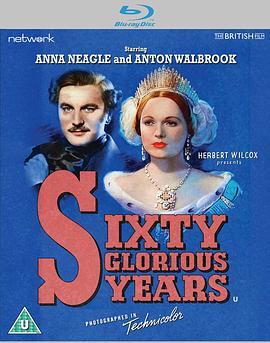
荣耀六十年1938
329
7.0
已完结
荣耀六十年1938
7.0
更新时间:06月29日
主演:Anna Neagle,Anton Walbrook,C. Aubrey Smith,Walter Rilla
简介:Sixty Glorious Years is an exercise in the creation of iconography, both for Victoria and its star, Anna Neagle (who subsequently became known as 'Regal Neagle'). Just as Elizabeth I commissioned artists to create flattering iconic images for public consumption, so this film performs a similar function, for Neagle is more beautiful than the real life Victoria. Controversial events (such as the 'Irish problem') are omitted and unpleasant aspects of Victoria's character (her petulance, arrogance, favouritism and 'right to privilege') are glossed over as endearing little 'whims'. Albert acts as a moderating influence when she goes too far.  The film followed a year after the highly successful Victoria the Great (d. Herbert Wilcox, 1937). Again the screenplay is by Miles Malleson and Robert Vansittart, and many of the supporting cast (the cream of acting talent of period) repeat their roles, this time for the colour cameras. This was the first full length Technicolor film of cinematographer Freddie Young, who captures the spectacle of royal weddings, grand balls and opulent interiors, with scenes actually filmed at royal palaces. Vivid battle scenes, set in Alexander Korda's empire territory (Sevastopol and the Sudan), rival those in The Four Feathers (d. Zoltan Korda 1939).  The title music sets the tone a regal choir sings over a shot of the crown. Elgar's 1901 'Pomp and Circumstance' march is heard during the diamond jubilee celebrations and, as Victoria's coffin lies in state, the film concludes with Anthony Collins' stately music accompanied by the text of Rudyard Kipling's 'Lest we forget'. Combined with the emotional appeal of scenes of Victoria connecting with her 'ordinary folk', this is stirring stuff.  The film connects with contemporary events of 1938. The release of two celebratory royal films was intended to boost public affection for the monarchy in the wake of Edward VIII's abdication. Anglo-German relations were another touchy subject. With another war on the horizon, influential voices wanted appeasement, and the film could be seen to fit that agenda. Victoria herself was of mainly German descent, nicknamed 'the grandmother of Europe', while Albert is a 'good German', charmingly played by Anton Walbrook as a cultured, decent man.  Sixty Glorious Years now seems unduly formal and reverential. Had movies existed during Victoria's reign (they only emerged at the end) this might have been the kind of film produced. Unlike Mrs Brown (d. John Madden, 1997), it is all so very 'Victorian'.  Roger Philip Mellor
3479
1938
荣耀六十年1938
主演:Anna Neagle,Anton Walbrook,C. Aubrey Smith,Walter Rilla
评论区
首页
电影片
连续剧
综艺片
动漫片
在线聊天